


Covid-19 Response: Engaging Vulnerable Communities
August 3, 2024
Mkenya Daima Keeps Youth from Politicians’ Grasp
August 3, 2024
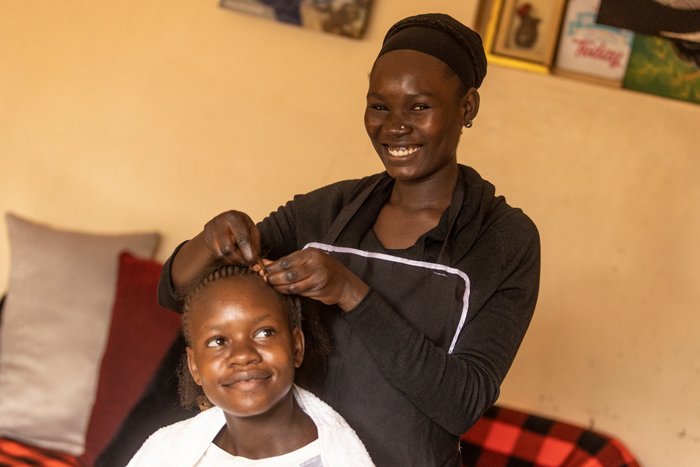
“From when I was a young girl in school, I always admired how girls and women would plait their hair. That is how I came to love hair and eventually beauty. I met mum Lunar when I was in Kibera, and thanks to her, I was able to go to hairdressing and beauty school and advance on my skills.” shares 22-year-old Yvonne Whitney.
Yvonne met Njoo Dada through a friend who was also her neighbor in Lindi area, Kibera. She connected her to the organization after hearing her story.
“I have greatly benefited from being at Njoo Dada. Firstly, a safe place and a shelter for myself and my child which I did not have at the time. My son is called Lavince and he is two years old now. We came to the safe house because we had nowhere to shelter. The father of my child wanted to marry me at that very young age which I did not accept, and he then later denied us. That is when I decided to leave and was connected to the safe house. I have also gone to school through Njoo Dada.” shares Whitney.
“I did exemplary well at the hairdressing and beauty school and now I am training to be a trainer of trainer while doing my business. I am slowly saving for my equipment as I go house to house based on referrals or my marketing on phone. Increasingly, my clients want advanced services for both hair and beauty.” adds Yvonne.
Post COVID-19 Livelihoods Response
Njoo Dada through a partnership of Kenya Community Development Foundation (KCDF) and Standard Chartered through the Post COVID-19 Livelihoods Response, received a grant of Kes. 1.2 million to reach 50 vulnerable young women with diverse skills training to earn a decent livelihood. The aim of the partnership was to support affected marginalized groups and households recover from the effects of the pandemic and build resilience.
“We were able to map out 50 young women to take on skills training in baking and catering (15), tailoring (15), hairdressing and beauty (10), and small-scale farming (10) through our livelihoods and outreach programme.” shares Lunar Odawa, Team Leader of Njoo Dada organization. Njoo Dada additionally has a safe house for young mothers who not only access shelter, but also medical care and access to safe delivery when needed.
Peninah Njambi Mumbi - 19 years
“I am in the baking business having advanced my skills in catering through Njoo Dada. I joined my mother in catering because baking has been a family passion.” shares Peninah. Peninah has perfected the art of baking cakes, mandazis and samosas and has now turned that skill to a full business venture.
“We were able to map out 50 young women to take on skills training in baking and catering (15), tailoring (15), hairdressing and beauty (10), and small-scale farming (10) through our livelihoods and outreach programme.” shares Lunar Odawa, Team Leader of Njoo Dada organization. Njoo Dada additionally has a safe house for young mothers who not only access shelter, but also medical care and access to safe delivery when needed.
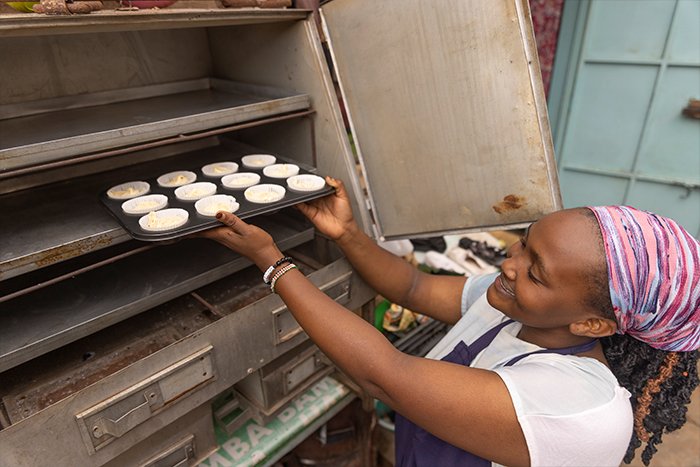
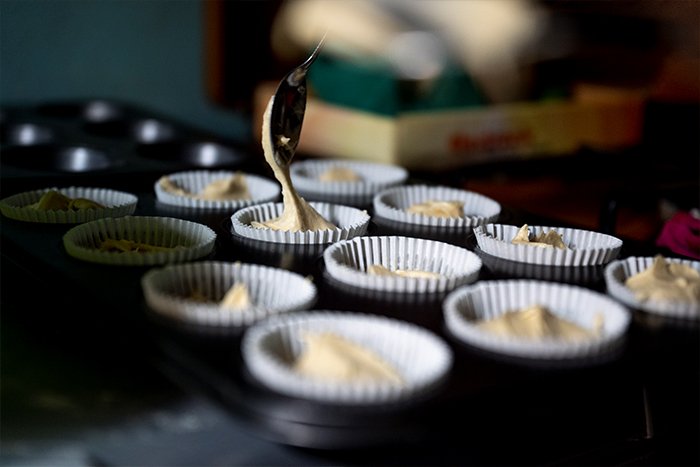
“I now have cake orders every Tuesday and Thursday for various small hotels as a breakfast option. Depending on the cake size, I sell between Kes. 1500 to Kes. 2500. Because of my skill, I am able to make a profit of Kes. 3000 a week which a portion of it I am saving for school to advance my baking and catering skills.” adds Peninah. Her plan is to save up to the Kes. 65,000 required fees for a Diploma certificate in Catering and Baking services at college level.
“I now have cake orders every Tuesday and Thursday for various small hotels as a breakfast option. Depending on the cake size, I sell between Kes. 1500 to Kes. 2500. Because of my skill, I am able to make a profit of Kes. 3000 a week which a portion of it I am saving for school to advance my baking and catering skills.” adds Peninah. Her plan is to save up to the Kes. 65,000 required fees for a Diploma certificate in Catering and Baking services at college level.
Serah Nyambura Kagia - Above 50 years
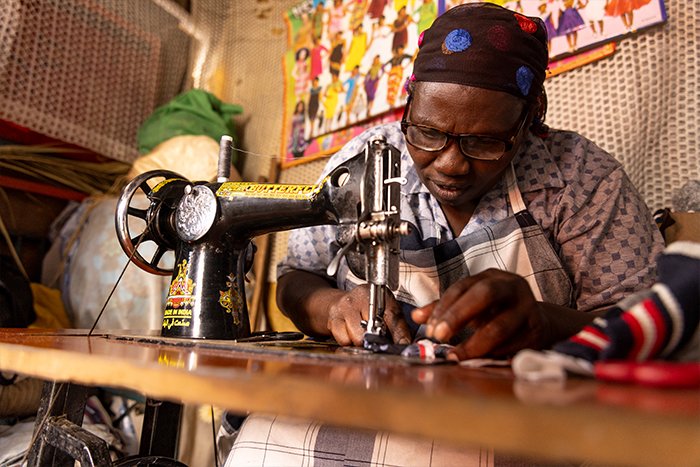
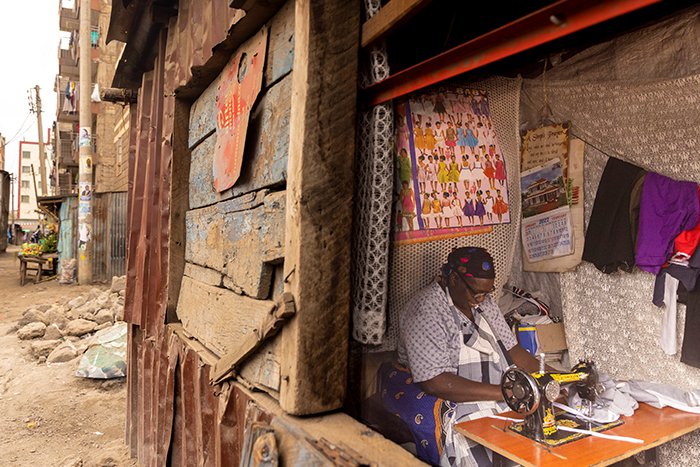
“Before the pandemic struck, I was a vegetable seller in Korogocho market. The business was affected because of the containment measures. Food was not coming into the city, my daughter then passed on and we had to find a way to cater for the entire family.” adds Serah. Serah now does tailoring largely making income from repairs and small orders for school from the community. This is her lifeline for her family. It provides not only food, but also caters for school fees for the children.
Lessons From COVID-19
Lunar and her team through the livelihoods project had lots of lessons to share having learnt to navigate the pandemic while implementing the project. “We have learnt quite a lot over the year of implementing the project and as we aim to scale, there are areas we will have to do better next time.” shares Lunar.
“Firstly, when not familiar with something consult widely. We were not successful on farming because we lacked the experience, and we thought it was an easy project. Additionally, young people are agile – they push themselves out of the box, are creative and project as we witnessed with those who especially took on bakery. They do not restrict themselves to what they know.” shares Lunar.
“Also, keeping in touch regularly with the beneficiaries helps the young women to be on their toes. Where they had a challenge, we were able to quickly pick the issue and support them, especially on tracking and keeping record. Collaboration has been beneficial for the young women – supporting their skills enhancement and financial keeping.” adds Lunar.