



A Juicy Turnaround; How collective action is transforming mango farming in Yatta
August 18, 2026
A Well of Learning: A library built by the community, for the community in Zimmerman, Nairobi.
August 18, 2026In Ndithini, a dry rural stretch in Machakos County where unreliable rains have long defined livelihoods, change did not begin with a donor programme or a government intervention. It began with a difficult conversation.
At the time, sand harvesting was one of the few reliable sources of income. It paid school fees, sustained households, and kept families afloat. But it was also steadily degrading the land. A group of Ndithini residents living and working in Nairobi first came together to try to stop it.
As those discussions unfolded, a deeper truth emerged. People were not harvesting sand out of choice, but out of necessity.
Urbanus Mwania, General Manager of the Ndithini Community Development Association(NCDA), recalls how that moment shifted everything.
“At the time, sand harvesting was ruining the land,” Mwania says. “But the founders quickly saw that people only did it because they had no other way to make money. They couldn’t just say ‘stop’ them, but had to give them a better way to earn a living.”
That realisation marked the beginning of a different kind of journey. In 2005, the initiative was formally registered, becoming what is now the Ndithini Community Development Association.
Building from almost nothing
The early days were modest. Members organised themselves into small groups of six, known locally as Kikundis. Each contributed KSh 50 for registration and KSh 40 for savings. They met in churches to learn the basics of saving and share contributions.
For Joseph Wambua, Board Chairman in Muthesya and a long-time member, the system did not immediately inspire confidence.
“I joined NCDA after someone introduced it to us in church, saying we could access loans from it,” Wambua recalls. “We were required to form a group of six, where trainers would come and teach us about savings and shares.”
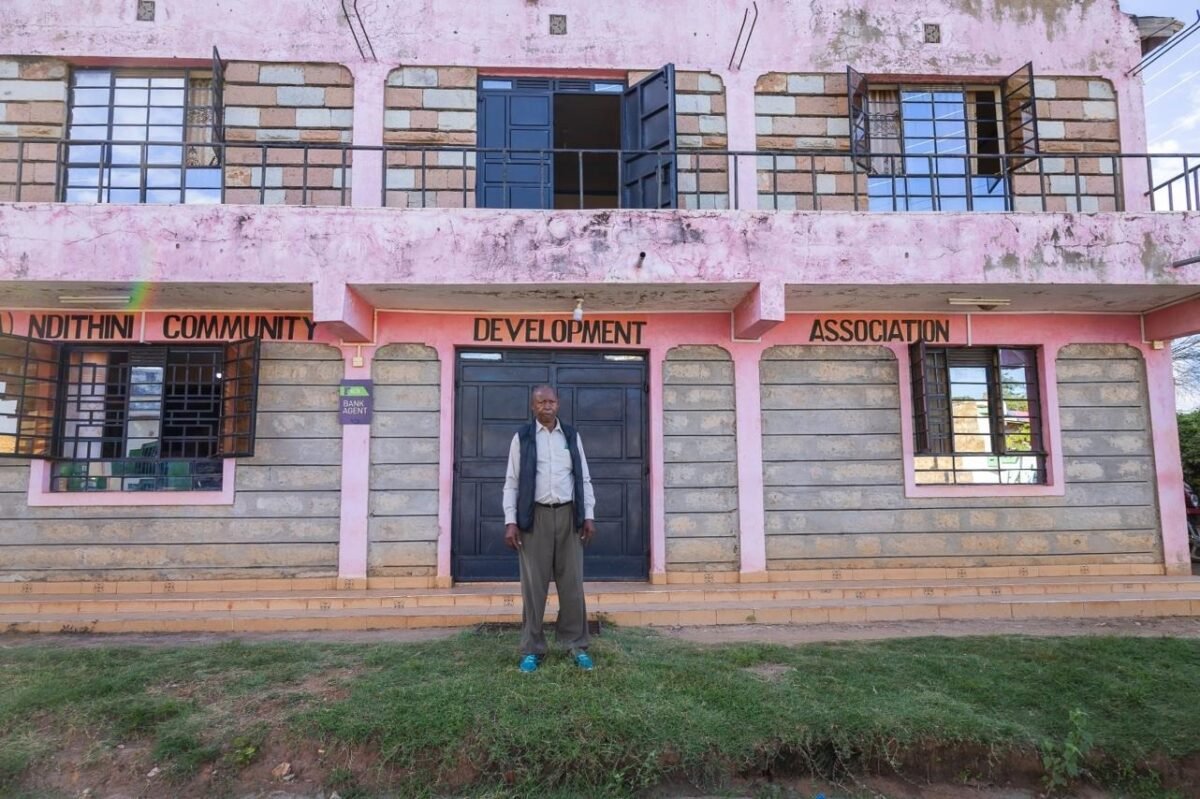
There were no systems, no infrastructure, and not even a safe place to store money. Like many others, he was cautious. But those small contributions, and the discipline behind them, laid the foundation for what would grow into a structured community institution. By 2007, 247 members had raised KSh 200,000, enough to begin. That shift changed everything.
“I began contributing shares slowly, but I was not fully committed. It was not until after I retired in 2018 that I really reflected on it. I compared NCDA with banks and other institutions and realised this system was more accessible and beneficial for us.”
The organisation invested in building its own systems, assets, and capacity, ensuring that it could sustain and expand its work.
Over time, this vision was structured into four key focus areas: institutional building, wealth creation, micro-lending, and community welfare.
Micro-lending became the backbone, running consistently for over 15 years and supporting thousands of members.
What started with just KSh 200,000 has today grown into more than KSh 91 million in share capital. Today, NCDA disburses approximately KSh 10 million in loans every month to its 7,400 members.
The model is simple, but deliberate. Loans are issued through groups of 9 members, who vet and guarantee one another. Access to credit is not based on formal employment, but on participation and trust.
Every year, during the Annual General Meeting, dividends are distributed. Over time, payouts have ranged from KSh 28 to KSh 60 per share, with at least KSh 8 million distributed in some years.
KCDF partnership
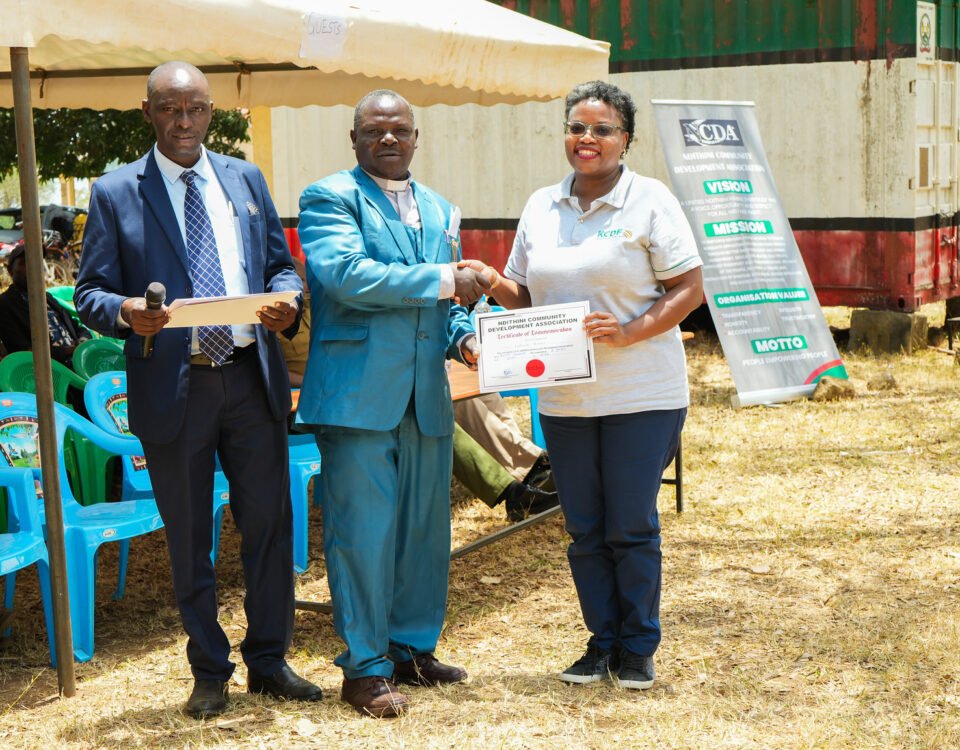
As NCDA grew, it became clear that community effort alone would not be enough to scale its ambitions. That is where partnership, particularly through the Fundbuilders Matching Grant Programme, became critical, whose approach is designed to strengthen ownership and ensure communities are active participants in shaping and funding their own development priorities.
KCDF Programmes Director Caesar Ngule situates this within the organisation’s broader philosophy of community-led development:
“KCDF exists for communities, but not in a way that just empowers communities; our role is complementary. We prioritise where there is the greatest need and greatest potential for transformation and have developed systems based on trust that help us identify partners.”
He further explains the intent behind the model and how it reshapes participation in development:
“Sometimes traditional funding tends to remove the role of communities in the action itself, and if not well curated, it disempowers them because there is not a lot of dignity, where it becomes ‘somebody come and do this for us.’ But what Pamoja for Change did was go beyond rhetoric. Communities begin identifying their own resources, mobilizing them, and bringing something to the table. The result is increased participation, alignment with real felt needs, and stronger accountability because communities themselves are involved in raising and questioning how resources are used.”
For NCDA, this aligned naturally with what had already been built internally.
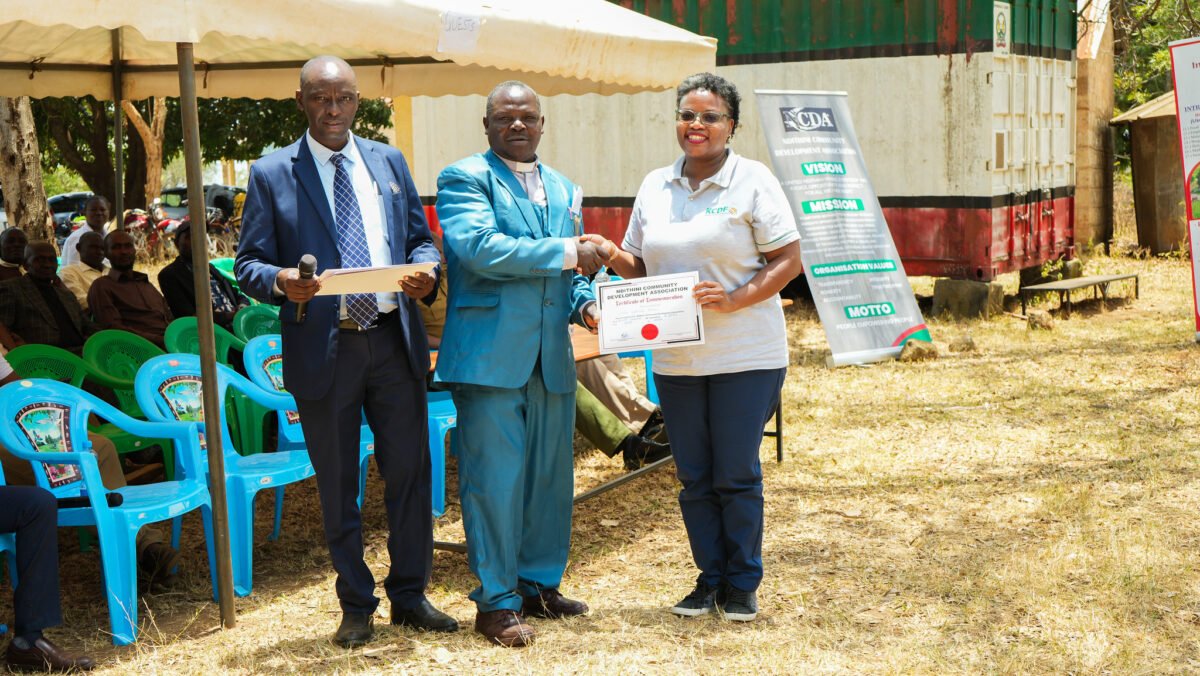
“We wrote a grant proposal to KCDF where the requirement was that the community raise its share first,” Mwania explains. “Once that was achieved, KCDF matched the amount we had raised. This strengthened ownership because people were investing their own resources.”
These funds were used to strengthen production systems supporting farmers, improve practices, and increase productivity.
Other partners complemented this support through technical training, particularly in agriculture and livestock.
“Some partners focus on training farmers, especially in livestock and farming practices,” Mwania adds. “This is important because it ensures people are not just investing, but doing things correctly.”
This matching grant approach has since shaped several of NCDA’s key livelihood projects.
Dairy farming
In dairy farming, members mobilised KSh 2 million from within the community. Through KCDF’s Fundbuilders matching support, the amount doubled to KSh 4 million.
The funds were used to train farmers on fodder establishment, harvesting, storage, and general animal management. They also supported the creation of 11 demonstration sites that now serve as learning centres.
At one of these sites, Pauline Mwikali walks through her compound, pointing to a cow that has come to represent something more than livestock.
A year ago, it was a calf. Today, it is pregnant.
“I didn’t just receive a cow,” Mwikali says. “I learnt how to take care of it. Before, we didn’t think much about proper feeding or housing. Now I know how to prepare fodder, how to store it, and how to keep the animal healthy. By next year, I expect to gain from selling milk and have something I can pass on.”
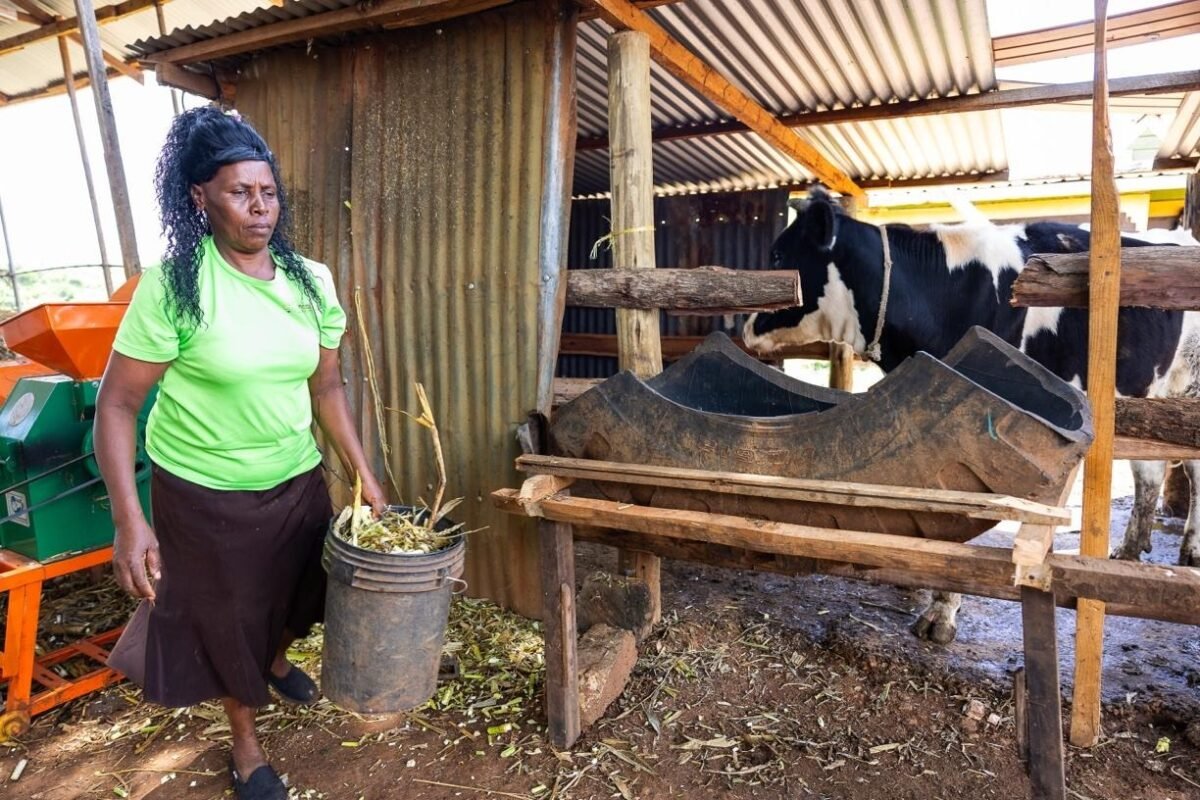
Her home has become one of the spaces where other farmers come to learn, not through theory, but by seeing what works. Behind much of this work is Paul Mbolonzi, NCDA’s Livestock Production Officer and a specialist in artificial insemination.
“Many farmers had cows, but productivity was low,” Mbolonzi explains. “Housing was poor, fodder was limited, and diseases often went untreated. They were losing income just because the basics weren’t in place.”
His role begins even before farmers acquire livestock.
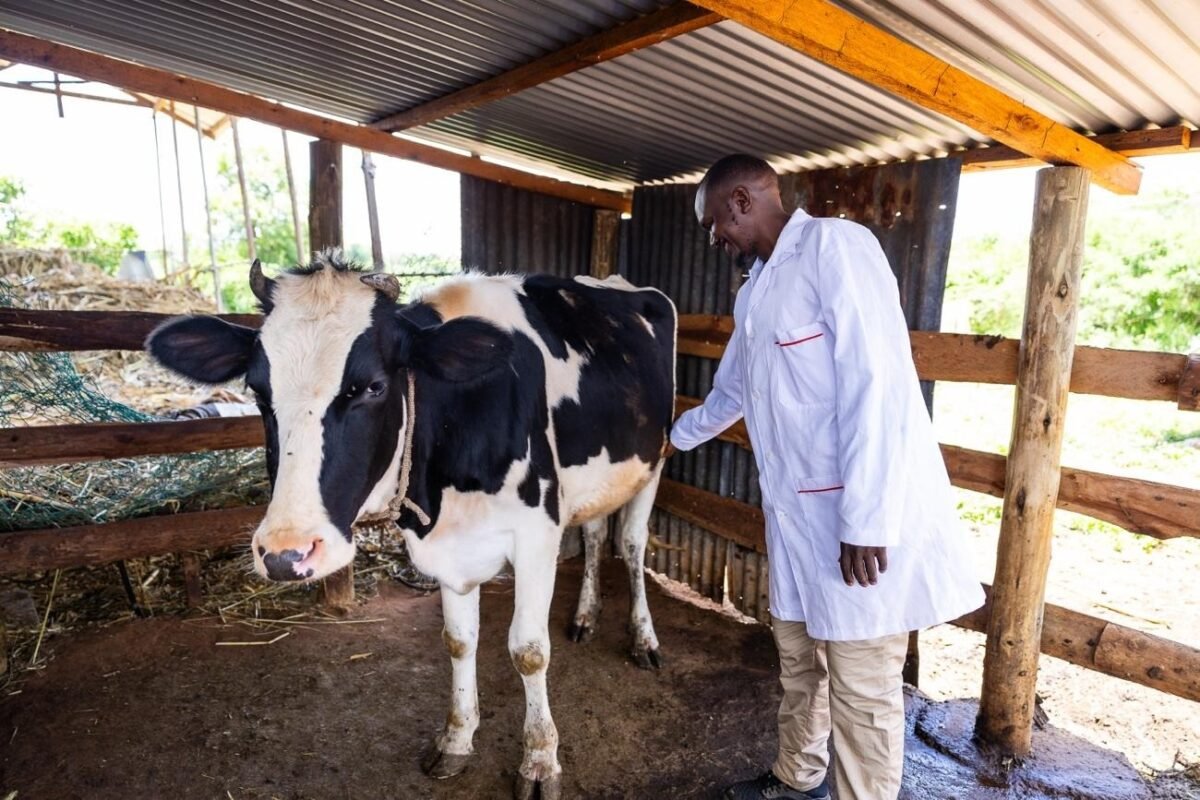
“We guide them to build proper housing, ensure enough feed, and control pests through regular spraying. Farmers also call me whenever a health issue comes up,” Mbolonzi says.
He also supports synchronisation, aligning breeding cycles so that more cows conceive at the same time.
“We do this through injections, and so far we’ve supported about 150 cows. This makes milk production more predictable, reduces repeated vet visits, and improves herd quality.”
Back at Mwikali’s home, that technical support is already visible. The cow is not just an asset. It is part of a system she now understands.
Beekeeping
The same model has driven growth in beekeeping, one of NCDA’s most visible success stories.
By early 2023, the community had about 200 hives. To scale up, members introduced a “buy one, get one” campaign, encouraging each other to invest. This effort was reinforced by a KSh 1.5 million matching grant through KCDF, which added 300 hives. In total, the number has grown to about 900 hives managed by farmers across the community.
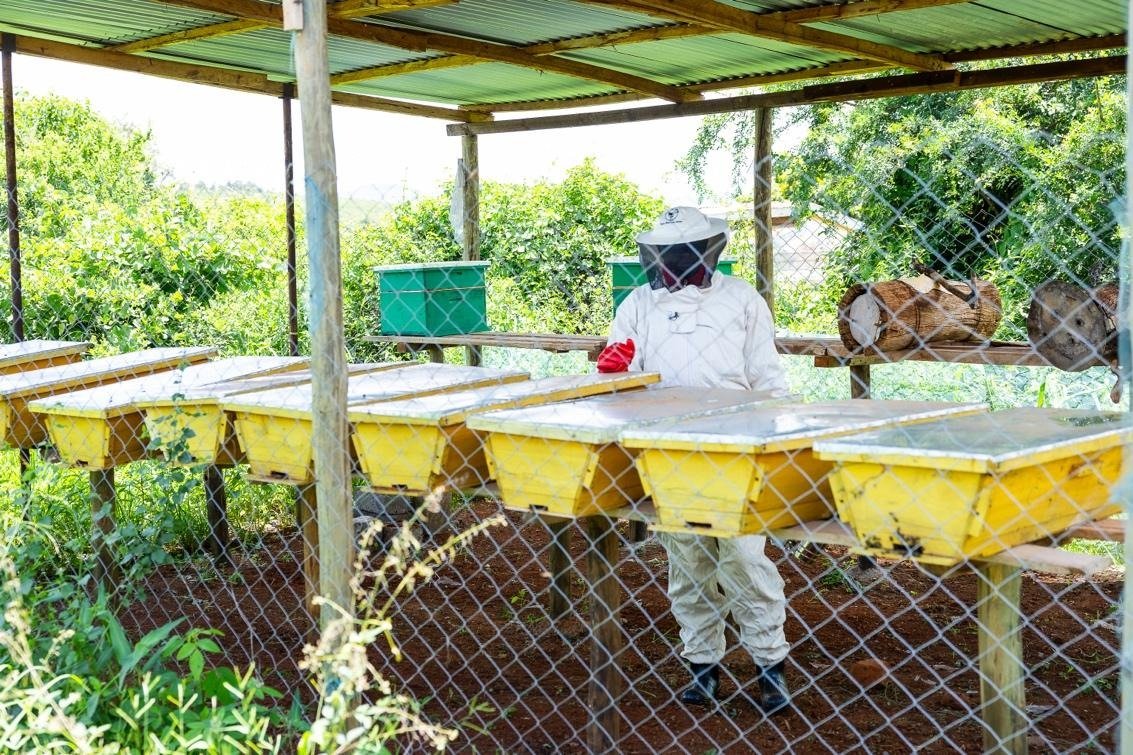
The project did not stop at production. With support from partners, farmers were trained in hive placement, management, harvesting, and quality control. Equipment worth approximately KSh 800,000 was also provided to support value addition.
NCDA then stepped in to coordinate the market, buying honey from farmers at KSh 540 per kilogram and handling aggregation, branding, and sales. The honey has since been certified, opening access to formal markets.
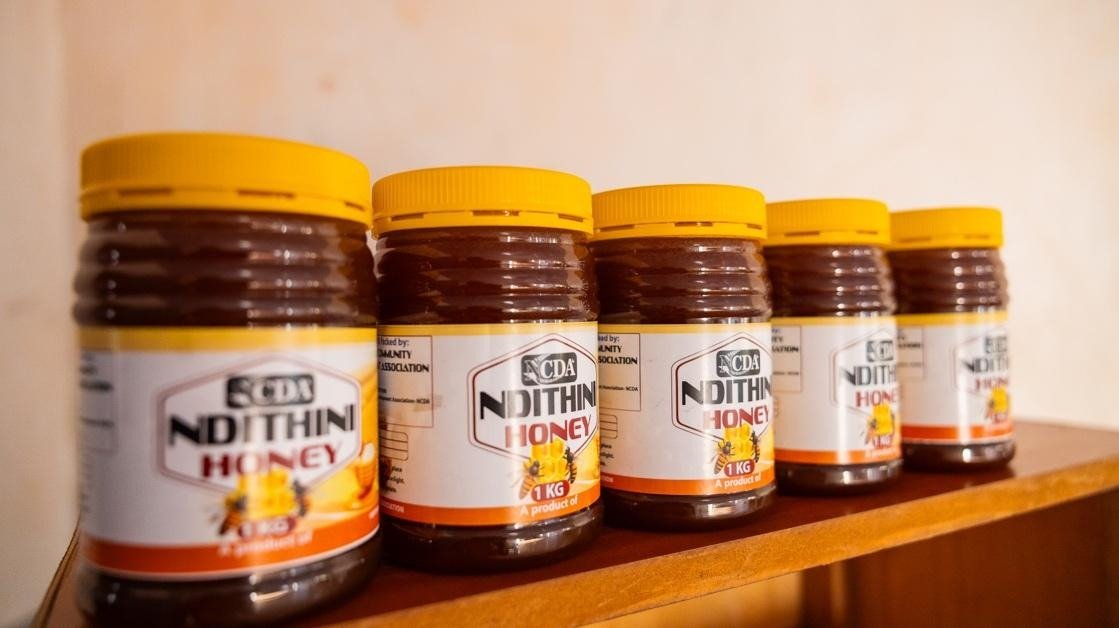
For Alexander Mweia, an NCDA Area Service Provider and beekeeper, the impact has been both practical and personal.
“We were trained on hive management, brood handling, safe smoking techniques, harvesting, and post-harvest handling,” Mweia says. “We also learned about quality control and sustainable production practices.”
From the lessons, he decided to put it into practice with 20 hives.
“At that time, it was just something small,” he says. “But with time, it has grown into a business. I harvest honey, sell it, and use that income to support my family.”
The ripple effects extend beyond his own household.
“I have also been able to start other businesses like a shop and a small hotel for my wife, and I comfortably support my children’s education,” Mweia adds. “What I have learned, I share with others.”
Poultry
For many members, diversification has become key to stability.
Anna Kathiaka, a long-time member, has built multiple income streams over time.
“I started with about 20 chicks after taking my first loan,” Kathiaka says. “I was not sure how it would go, but I decided to try.”
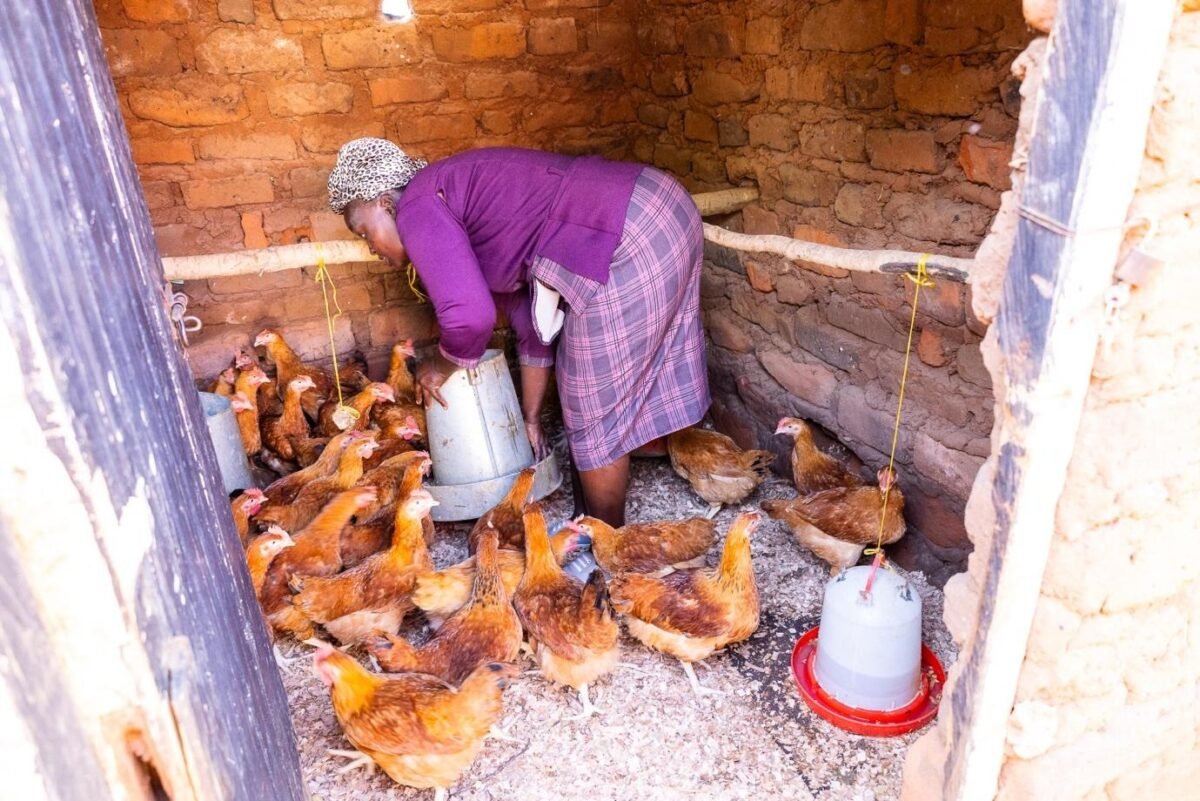
Today, she keeps about 50 chickens, alongside beekeeping, fish farming, and dairy.
“For poultry, I rear the chickens for about three months and sell each at between KSh 650 and 700,” she explains. “With honey, I sell to NCDA at around KSh 540 per kilogram.”
Her journey reflects steady progression rather than sudden change.
“I started with a loan of about KSh 15,000. I have taken loans several times since then, and they have helped me invest in different projects,” Kathiaka says.
Before joining NCDA, she says, things were different.
“I did not have a stable source of income. It was difficult to sustain my family. Today, I have been able to educate my children and take care of my household.”
Strengthening the institution itself
But even KCDF has also played other roles in NCDA beyond just the provision of the P4C grant. With KCDF’s backing, NCDA developed operational manuals, reviewed its constitution, upgraded internal systems, and built a stronger governance framework. Training programmes for staff and board members were also introduced, ensuring that leadership and operations could match the organisation’s growing scale.
KCDF’s support also extended to infrastructure and visibility. NCDA established its own digital presence, including a website and domain, improving communication and coordination.
“KCDF did not just come in with funding; they came in with a process that helped us understand how to organise ourselves better, plan better, and take responsibility for our own development as a community,” Mwania said.
It has also invested in physical assets. The organisation now owns its main office, two additional branch properties, and several parcels of land earmarked for future development, including a processing unit. To support operations, NCDA uses eight motorbikes for coordination across the area.
Through partnerships, schools in the area have received reusable sanitary pads worth over KSh 5 million in two years.
At the same time, an endowment fund established with KCDF has grown from KSh 4 million to KSh 6 million. The returns are used to provide bursaries to students in universities and technical institutions.
These interventions reflect a broader understanding of development, one that goes beyond income to include education and wellbeing.
A shift in mindset
Despite the progress, KCDF notes that the model is not without challenges.
One of the biggest hurdles, according to KCDF, is mindset. KCDF Programme Team Leader Emily Omudho explains:
“When communities struggle to realise they can raise resources locally, it takes time. Mindset is not something you change overnight.”
She adds that implementation can also be constrained by capacity and absorption challenges.
“Some organisations fail to meet their fundraising targets, while others face donor fatigue within their communities or limited funding.”
Still, she notes that exposure, peer learning, and visible success stories continue to shift perceptions over time.
For NCDA the matching grant model has pushed the community to mobilise its own resources. Members are no longer just beneficiaries. They are contributors, investors, and decision-makers.
“The biggest lesson from KCDF is that communities must stop waiting for handouts. They helped us realise that real change comes when people contribute, take ownership, and build something for themselves,” Mwania added.
In a place that has long felt overlooked, people are no longer waiting for solutions from outside. They are building them.
As Wambua reflects, the work is far from finished.
“We have made progress, but we are still growing,” he says. “The focus now is to strengthen what we have built.”
And in that quiet determination, Ndithini’s story continues to unfold not as a finished success, but as something still being shaped, step by step, by the people at its centre.