




KCDF Awards KES 31.5 Million to Young Environmental Innovators as I&M Foundation Partnership Expands Challenge
August 4, 2026
KCDF Newsletter, August 2026
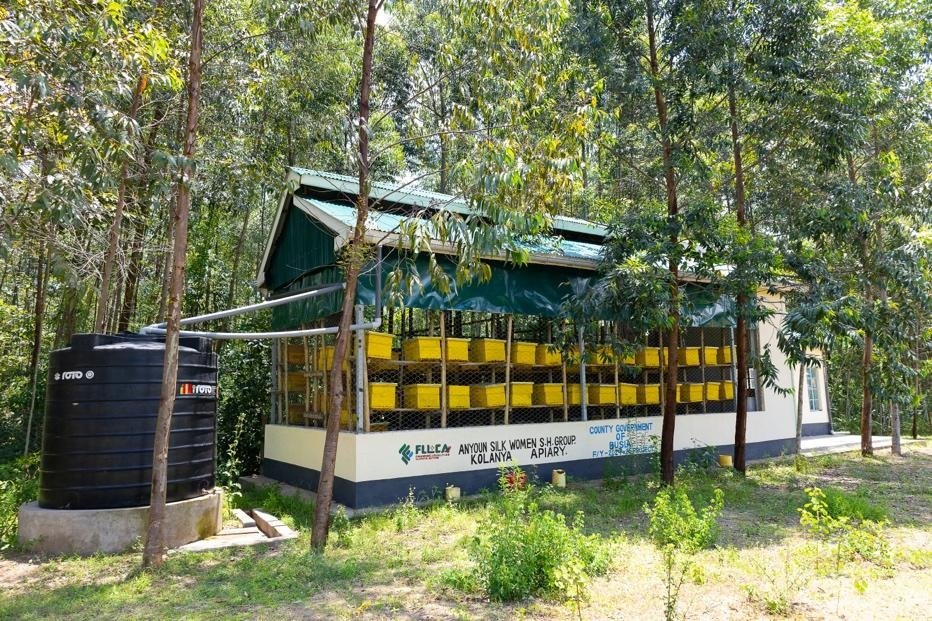
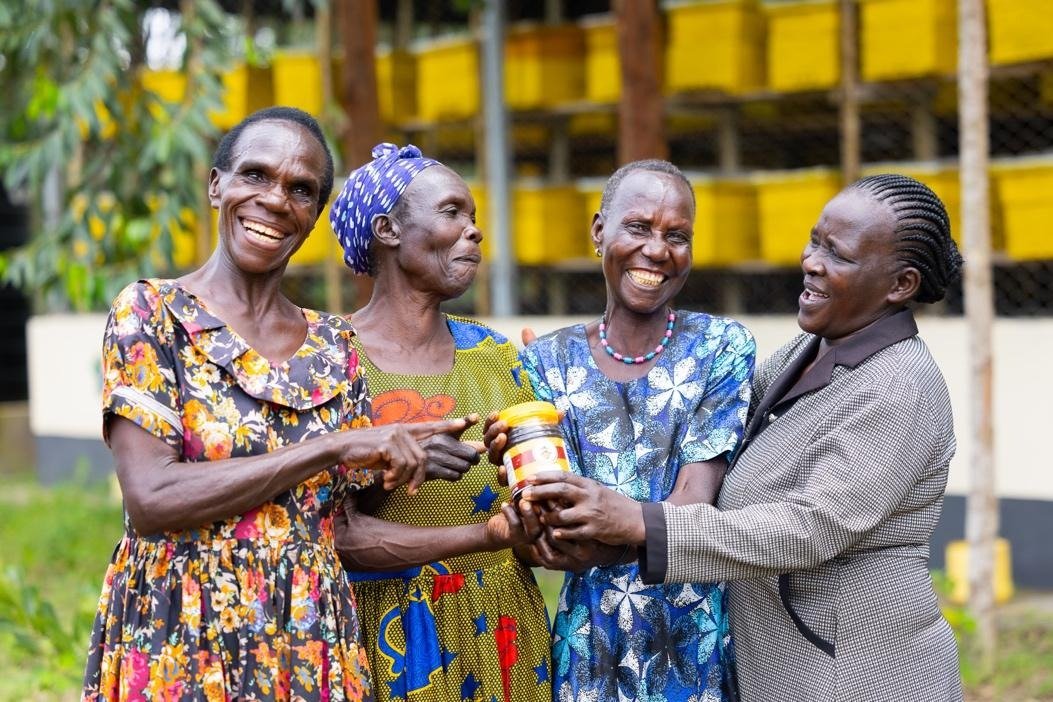
August 13, 2026Inside a modest beekeeping shed in Kolanya, Teso North, in Busia County, rows of hives now represent far more than honey production. For members of Anyoun Kolanya Women Group, the project reflects years of gradual growth built through savings, collective work, and community support.
The group, made up largely of women affected or infected by HIV/AIDS and supporting more than 100 orphaned and vulnerable children, began as a simple merry-go-round initiative in 2018 to fight poverty and stigma, before later expanding into beekeeping and Savings Investment Loaning Communities (SILC) activities with support from Akukuranut Development Trust (ADT).
Speaking about the early years of the group, Jocelyn Asike, the chairlady, says members initially came together simply to support one another through difficult household situations before they began considering structured income-generating activities.
“When we first connected with ADT, they started us with five beehives to see whether we were committed and ready to work. The women worked very hard, managed the hives well, harvested honey, and through the support of ADT, we were able to sell our products and start earning income,” she says.
At the beginning, the group had very limited resources and little experience in organised livelihood activities. However, the beekeeping project gradually introduced a stronger savings culture and helped members begin viewing the group as an economic support system rather than only a social one.
As members became more organised, the project started expanding beyond the initial hives that had been introduced through ADT support.
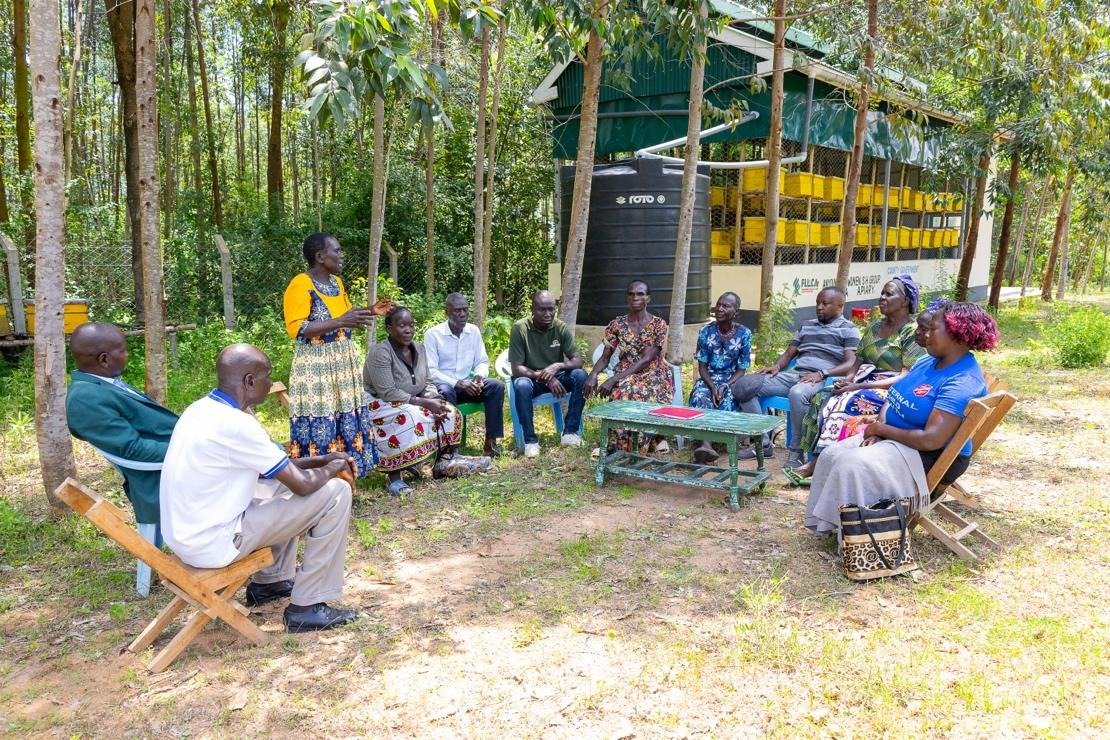
“After starting with five hives, we later managed to buy seven more hives on our own, bringing the total to twelve hives. When people outside the community saw the progress we were making, even the county government became interested in supporting us. The county government later supported us with 246 additional beehives after seeing the success of the group,” Asike explains.
The expansion increased production capacity and transformed the group into one of the more visible community-led beekeeping initiatives in the area.
The story of Akukuranut Development Trust
The growth of groups such as Anyoun Kolanya Women Group reflects a wider approach developed over decades by Akukuranut Development Trust, a non-profit community organisation that began in 1989 through women-led savings initiatives before expanding into structured livelihood programmes.
According to Judith Atyang, the Trust Manager, the organisation initially focused on table banking and community savings before gradually moving into agriculture, enterprise development, and household empowerment programmes.
“We started as a women’s group focused on improving livelihoods within the community through savings and collective support. Over time, the organisation grew, and we realised that communities needed more sustainable income-generating activities beyond savings alone,” she says.
She says the organisation’s approach has always centred on helping communities move away from dependency and towards collective ownership of projects.
“We realised communities needed more than direct support. They needed structures that could help them mobilise resources, lend to one another, and sustain projects on their own. Through the SILC groups, communities slowly began building confidence around saving, fundraising, and investing in income-generating activities,” says Atiang.
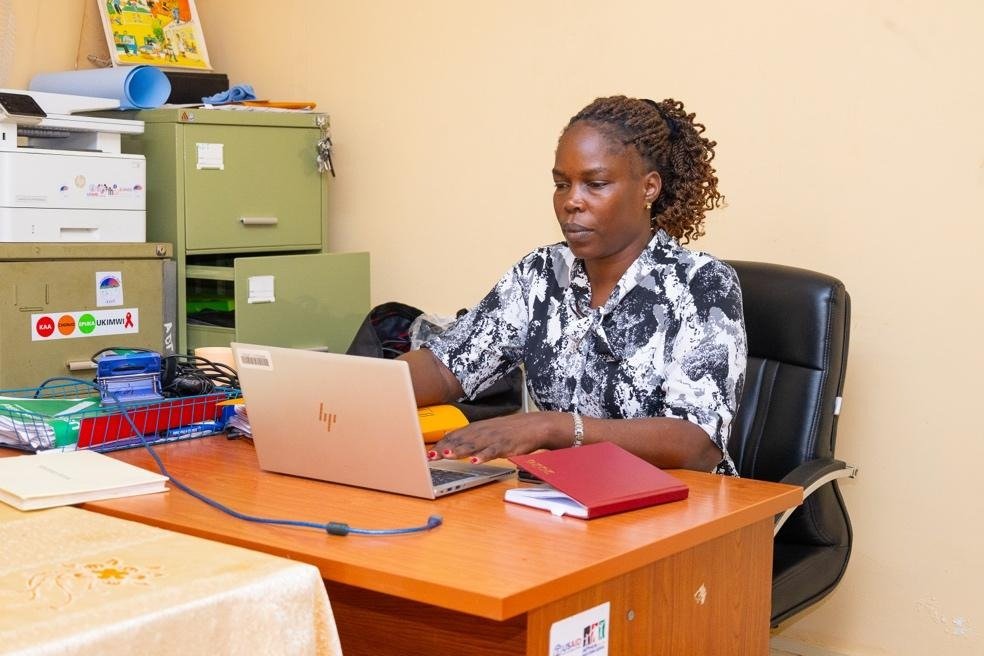
Atyang explains that beekeeping later became one of the organisation’s strongest livelihood models because it could be managed collectively while still generating household income for vulnerable families.
As the programme expanded, ADT developed systems to support production, harvesting, and marketing. The organisation now works with hundreds of beehives distributed across groups and individual farmers.
“We have trained artisans who construct the hives locally, while extension officers help groups identify suitable sites, monitor colonisation, and supervise harvesting. The honey is then processed, packaged, and marketed through the organisation, and farmers are paid according to the quantity supplied,” Atiang says.
She adds that the model has gradually expanded beyond beekeeping into wider economic empowerment activities linked to SILC groups and the organisation’s SACCO structures.
Partnership with KCDF
The expansion of the programme was further strengthened through a partnership with the Kenya Community Development Foundation (KCDF), under the Pamoja for Change (P4C) programme. Under the shilling-for-a-shilling model, communities are required to contribute 50 per cent of project costs, while KCDF matches the remaining amount.
According to Caesar Ngule, KCDF Programmes Director: “When implementing Pamoja for Change, you always go back to the essence of the name, which means together. KCDF sees the community or organisation hosting the intervention as the owner of the initiative. We work with them through peer learning, exchanges, and leadership development so that they can build the capability and confidence to raise their own resources and sustain their development processes.”
The approach was designed to strengthen ownership and reduce long-term dependence on external donor support.
The proposal from ADT was estimated at KSh 2 million. KCDF contributed 50 per cent, while ADT and the community mobilised the remaining amount through cash contributions, labour, timber, and other in kind support. The project later expanded into additional phases after the initial model proved successful among participating groups.
“The same contribution model continued into later phases because communities had already started understanding the value of ownership. Once people contribute something of their own, they begin protecting and sustaining the project more seriously,” Collins Juma, Finance Manager at ADT, explains.
Today, ADT works with 25 SILC groups spread across Teso North, Teso South, and Teso Central, with a total of 294 beehives distributed among groups and individual beneficiaries.
Savings, Loans and Household Stability
Beyond beekeeping, many of the SILC groups have also evolved into financial support systems for caregivers, widows, and low-income households struggling with school fees, food insecurity, and unstable incomes.
Within Anyoun Kolanya Women Group, members now access soft loans repayable within one to three months at a low interest rate of 10 per cent.
Speaking about the impact of the lending system, Rose Ijaka, the treasurer, says the group has become an important safety net for many households that previously struggled to access quick financial support.
“We hold regular meetings where we review our progress and discuss challenges facing members. During meetings, members openly share problems such as school fees and household needs, and we support each other through savings and internal lending,” she says.
Ijaka explains that access to group loans has enabled many members to meet urgent family needs without relying on expensive informal lenders.
“I personally received a loan of KSh 25,000, which helped me pay school fees and manage family expenses. Some of the funds we raise are also used to support vulnerable members with basic needs so that no one is left behind,” she explains.
The loans have also supported diversification into other small livelihood activities beyond beekeeping.
Financial Independence
Across other ADT-supported SILC groups, members say the savings and lending systems have gradually changed household financial dynamics, particularly for women who previously depended entirely on spouses or irregular casual work.
For Consolata Chakra, a member of Umoja A SILC group, the biggest change has been financial confidence and the ability for women to contribute directly to household needs.
“Before the group started, many women did not know anything about savings or financial management. ADT brought us trainers who taught us how to save and lend money responsibly, and that knowledge changed many families,” she says.
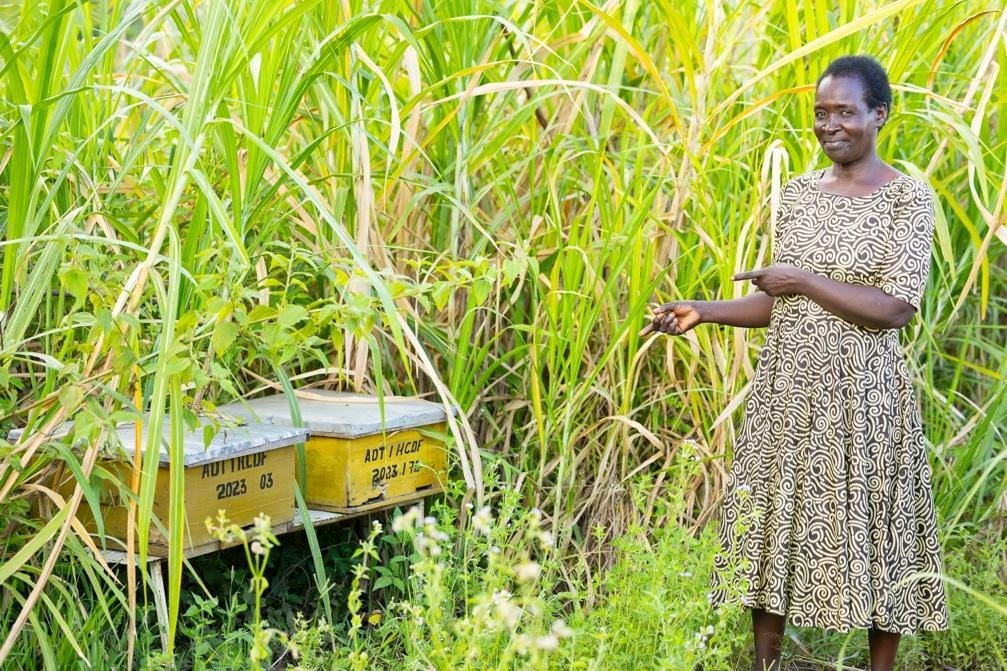
She explains that women who previously struggled to meet even basic household needs are now able to support school fees and small home improvements through loans and savings.
“There was a time when some women could not buy soap or vegetables without asking their husbands for money. Today, women are able to support their children and manage household needs through the savings groups,” Chakra says.
Similar progress has been witnessed in Bidii SILC Group, where members gradually built their savings from very small contributions into a more organised financial structure.
According to Jennifer Okrut, the chairperson, the group initially struggled with low savings and limited financial understanding before training and collective discipline strengthened operations.
“When we began in 2018, many members did not even know each other properly, and our savings were very small. Some people started with just five shillings or ten shillings, but over time the group became stronger and we even opened a group account,” she says.
She adds that the income generated through beekeeping and group activities has helped support children’s education and small businesses among members.
“Some of our children are now in college because women are able to earn income through the group and support school fees. Other members have started small businesses and improved their livelihoods gradually,” Okrut explains.
Despite the progress, challenges remain. These include limited infrastructure for beekeeping, lack of protective gear, climate variability, and resource constraints for expansion.
“The hives we received from the county government were many, so each member took home two to help manage them. But even with that arrangement, the resources required to maintain them are still not enough. We also need sunflower seeds to plant so that the bees can access nectar and not migrate,” says Ijaka.
There is also a mindset challenge, where some community members still wait to see results before fully participating.
However, ADT leadership remains focused on long term sustainability.
“At this point, we are focused on ensuring communities understand that development is not a handout. It is something they must own, contribute to, and sustain themselves. Even with reduced donor funding globally, we are still operating because of the systems we built with KCDF on local resource mobilisation,” Juma says.
Reflections on Community Ownership
Unlike earlier donor-supported projects where communities received equipment entirely free of charge, ADT says the co-investment model created stronger responsibility and accountability within the groups.
“In the past, when projects were fully donated, some people did not value them because they felt the beehives belonged to donors. Some hives were even neglected or destroyed. But with the 50-50 model, communities understood that they had invested their own money and effort, so they became more committed to protecting the project,” says Juma.
For KCDF, the programme reflects a broader effort to shift communities away from dependency towards locally driven development models built around contribution and participation.
According to Emily Omudho, KCDF Team Leader, the P4C approach focuses not only on funding projects but also on strengthening local fundraising and sustainability systems within communities.
“We train organisations and communities on local resource mobilisation so they can begin supporting their own initiatives. The goal is to help communities realise that development is stronger when people contribute towards it themselves,” she says.