



How strategic funding strengthened NCDA and lifted a community
August 18, 2026
Savings Groups Transform Livelihoods for Vulnerable Families in Siaya County
August 18, 2026Zimmerman, in Nairobi’s Roysambu Constituency, is a densely populated urban settlement shaped by movement, work routines, and households where children often return from school into environments with limited structured learning support.
“It is a highly populated area because most of the buildings are flats, which hold a bigger population. Most people depend on employment. They leave in the morning and come back in the evening.” Silas Nthenge, the area’s Assistant Chief, says.
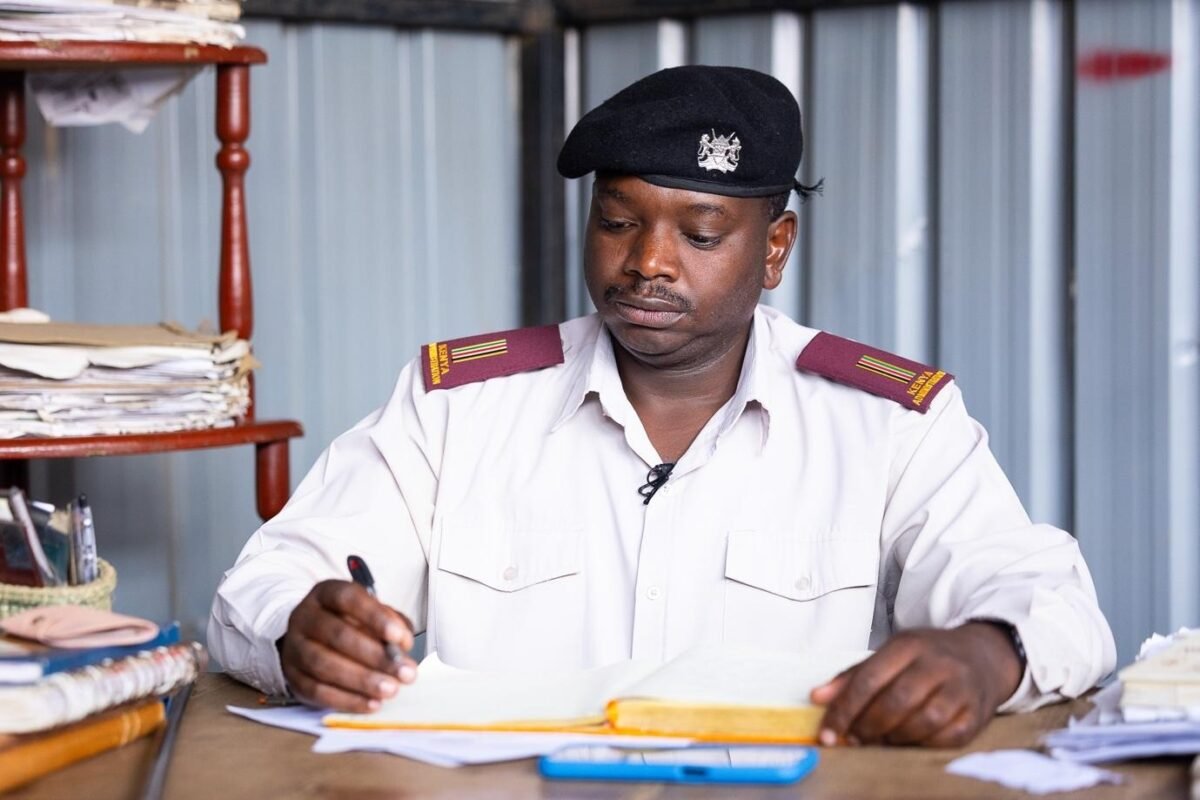
This daily absence of adults leaves children in a quiet gap between school and home, with limited structured learning support. While schools exist, supplementary learning spaces, especially libraries, have historically been absent.
For years, children who needed reading materials had to travel long distances. The closest major library option was Kenyatta University, nearly five to six kilometres away.
“For a child, unless they had money for transport, they could not access it,” Nthenge notes. “So most children in Zimmerman had no idea what a library was or what it could do for them.”
That absence of accessible learning spaces eventually opened the door to a community library, implemented by Rafiki Multipliers of Information Initiative (Rafikistry) with support from KCDF under the Pamoja for Change (P4C) programme.
From learning gaps to a community space
Rafikistry began 17 years ago, long before the existence of a library, growing from informal engagement with young people into a structured youth-focused initiative. Founder and Executive Director Joan Njeri recalls the early years as deeply informal, rooted in everyday interactions with young people.
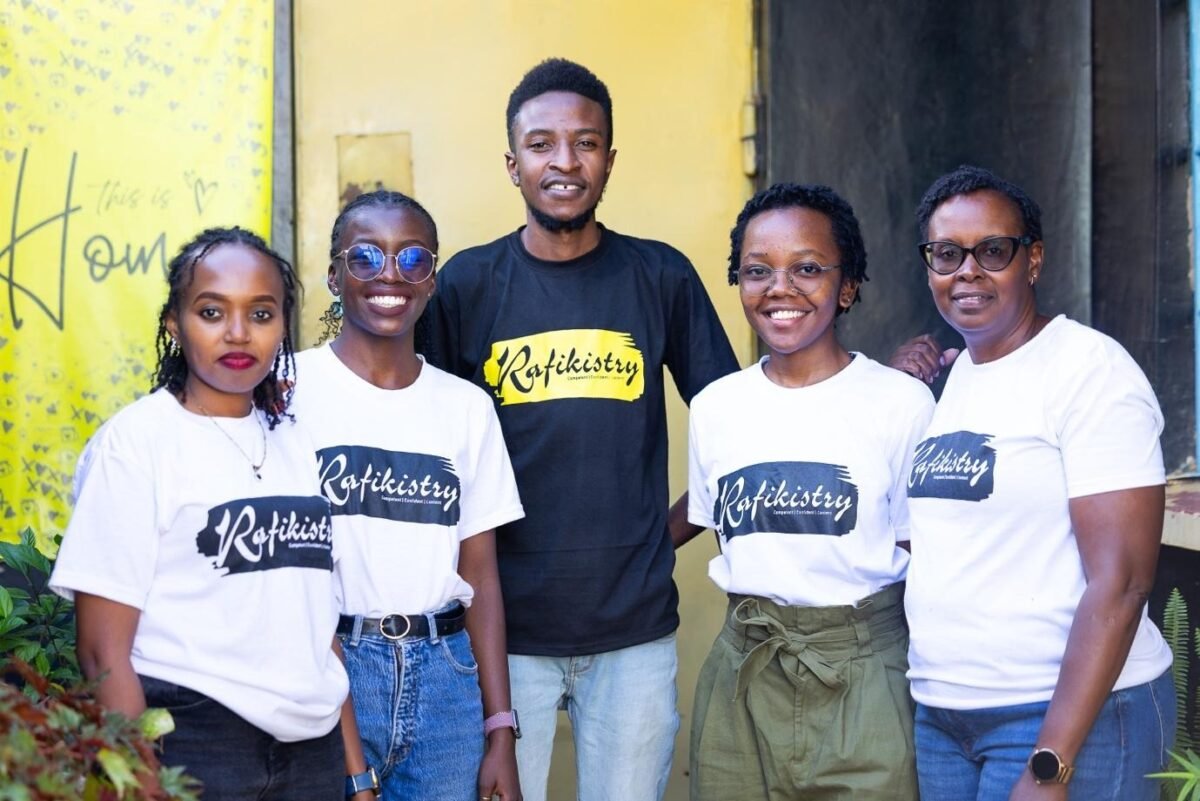
“We didn’t even have an office at the beginning,” she says. “We were just moving around the community, meeting young people where they were, listening to what they were going through, and trying to share information that could help them make better decisions in life. It was very unstructured, but it was very intentional in terms of being present for them.”
Over time, those conversations revealed consistent challenges in education. Rafikistry shifted into structured school-based programmes, including life skills, sexual and reproductive health education, and reading support. But one issue kept repeating itself: children were struggling with basic literacy.
“A child in class six could barely read simple words,” Njeri explains. “It was not just one case. It kept showing up across different schools, and that is when we realised we were dealing with something much deeper than we initially thought.”
Between 2014 and 2024, Rafikistry intensified reading interventions and created a small reading space that could only accommodate about 12 children at a time.
“It started very small,” Njeri says. “We could only take about 12 children, but even that small space showed us what changes when children are given access to books and guidance. It showed us the possibility of something bigger.”
That small beginning grew into Kisima Community Library, now serving between 60 and 80 children daily.
“Kisima means a well,” Njeri adds. “And the idea was that children would come here to draw knowledge the way you draw water from a well, something that is always available when needed.”
Today, it remains the only community library within Zimmerman, serving as both a learning space and a social anchor for children and youth.
KCDF input through Pamoja for Change
The transformation of the library was significantly shaped by KCDF’s Pamoja for Change programme, implemented in partnership with Wilde Ganzen. At the centre of the approach is a “shilling-for-shilling” model, where communities are required to raise half of the total project cost, which is then matched by KCDF.
The idea is not just financing projects, but shifting ownership to the community level. KCDF Programmes Director Caesar Ngule explains the philosophy behind this approach.
“Communities must identify their own resources, mobilise them, and bring something to the table, not just as beneficiaries but as active contributors,” he says.
“When that happens, the relationship changes completely. It becomes something they own, something they feel responsible for, and something they are more likely to sustain.”
Under P4C, Rafikistry proposed a total budget of KES 1,000,000 for the library programme. The community was expected to raise KES 500,000 through cash and in-kind contributions. In practice, they exceeded this target, raising KES 352,000 in cash and more than KES 500,000 in in-kind support. Contributions came in the form of books, furniture, laptops, desks, and materials sourced from residents and businesses.
Programme Manager Sherrine Achieng says the response changed how the project was experienced on the ground.
“What stood out was how quickly people responded once they understood the vision,” she says.
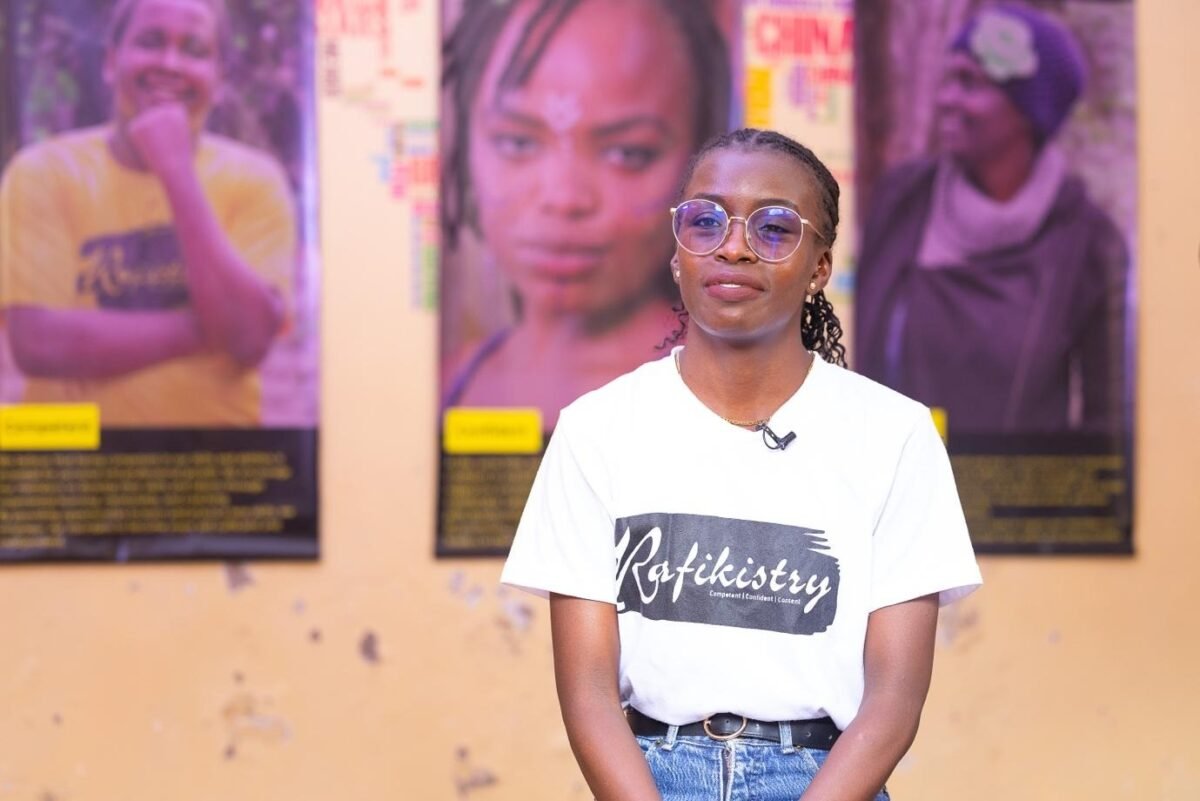
“It was no longer about being asked repeatedly. The community took initiative, and people brought books, furniture, and even construction materials without hesitation. That level of participation made it clear this was something they genuinely owned.” She adds that the response was unexpected.
Strengthening systems before funding
Before implementation, KCDF conducted a Participatory Organisational Capacity Assessment (POCA), reviewing Rafikistry’s governance structures, financial systems, procurement processes, and HR frameworks. The exercise was not just evaluative, but reflective, pushing the organisation to look inward before scaling outward.
Founder and Executive Director Joan Njeri describes the process as uncomfortable but necessary.
“We sweated through it,” she says. “At some point, we had to admit that we were not running the organisation the way it should be run. It forced us to confront gaps we had been managing informally for years.”
The assessment revealed gaps in organisational structure, which KCDF supported through capacity strengthening rather than replacement.
Achieng explains the impact.
“KCDF strengthened our finance, procurement, and HR systems,” she says. “Before that, we did not even have HR policies. Now we have clear systems and documentation that guide how we operate.”
She adds that the support continued beyond training, with KCDF following up on implementation beyond P4C.
Inside Kisima: Where learning becomes a daily practice
At Kisima Community Library, learning follows a structured daily routine: homework support, reading sessions, and creative activities. The space currently serves between 40 and 60 children per day, with a total reach of 1,605 children since opening.
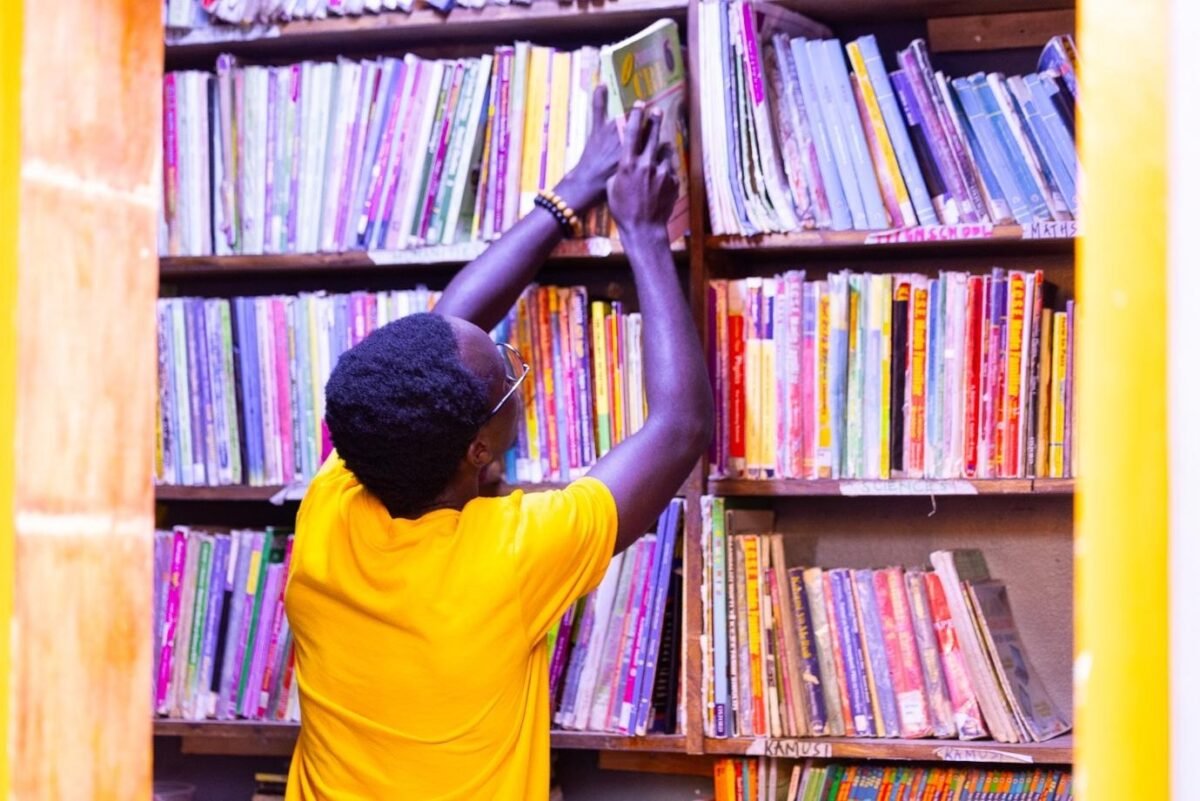
Digital literacy sessions have become one of the most revealing components of the programme.
“Many children are touching a computer for the first time,” Sheryll notes. “We assumed they had exposure in school, but that was not the case.”
This realisation shifted programming priorities towards more foundational digital skills, including keyboard use and basic computer interaction.
Volunteers, from learners to mentors
Volunteers have also become central to the space. Njeri explains that the programme has evolved into a volunteering and job-shadowing pipeline.
“After Form Four, young people join us for a 16-week X-CAN programme. Some stay longer as volunteers or do job shadowing from February to August. We teach them facilitation, meetings, reporting, and even how to handle interviews. They become a real support system for the library.”
Emmanuel Limo, one of the volunteers awaiting university entry in September, describes his experience as a shift in both learning and confidence.
“Before I knew about the library, I used to study at home, and there were many distractions,” he says.
“Here, it becomes easier because you are around people at your level, and when you do not understand something, you can ask and actually learn instead of struggling alone.”
He says what made the difference was the approach to learning.
“They don’t just give you answers,” Limo explains. “They guide you through the process so that you understand how to solve problems on your own. That stayed with me.”
That experience shaped his decision to return.
“I wanted to give back in the same way I was supported,” he says. “So that another child can also benefit.”
He now supports homework sessions and reading activities.
“You find children who cannot even read full sentences,” Limo says. “So you go back to basics and help them slowly build confidence.”
Jenny Rose Mwende describes volunteering as a turning point in how she understands people and her career.
“Coming here has taught me how to interact with different children,” she says. “Some are shy, some are stubborn, but you learn patience and how to guide them. It teaches you respect because everyone is learning at their own pace.”
She says her career direction changed through this experience.
“I initially wanted to become a paediatrician,” Mwende says. “But working here with children made me realise it would take more than patience and understanding. That is why I now want to pursue nursing instead.”
She adds that the experience has shaped her personally.
“It has helped me grow in how I think and respond to people,” she says. “It is more than volunteering. It is personal development.”
Learners progress
Among learners, the impact is visible in confidence and direction.
Bradley Sirengi, a Form Three student, says the library improved his academic performance.
“Before coming here, I struggled with some subjects,” he says. “Now I can revise better and ask questions freely. It has helped me prepare for exams more effectively.”
For Kylie, a Grade Eight learner, the change extends beyond academics.
“My communication has improved, and I am more focused in school,” she says. “I also now want to pursue STEM, and the digital literacy sessions helped me see that path clearly.”
Parents’ perspective
For Ann Wanjiru, a parent whose children access the library, the changes are visible at home.
“Before, my children struggled with reading and confidence,” she says. “Now they are improving and can read better.”
The library has also eased financial pressure at home. Previously, supporting her children’s learning meant spending on internet bundles to access materials online or paying for extra tuition.
“I used to pay for extra tuition or internet bundles for my children to access learning materials online,” Wanjiru says. “Now they get support here, and it has made things easier for me.”
For Wanjiru, the value of the library goes beyond academics; it is a reliable support system for both learners and parents.
“As a parent, I am grateful for the difference this has made in my children’s education. And I thank KCDF for the role they played in supporting the initiative.”
But despite progress, demand continues to grow faster than available space.
Assistant Chief Nthenge notes the pressure.
“The space is small for the number of children accessing it,” he says. “Some even come very early just to wait outside because they do not want to miss access.”
As a result, access to the library has had to be structured in intervals to manage demand. Mornings are often the most crowded, with many learners arriving early in hopes of securing a spot. Those who cannot be accommodated at that time are encouraged to return later in the day, creating a rotation that allows children access to the space.
Within Rafikistry, Achieng says growth has brought both success and strain.
“Each term the numbers increase,” she says. “We adjust constantly because demand keeps rising. But it also shows the model is working because more people keep coming and bringing others.”
Lessons from P4C and the future
As demand continues to stretch the limits of space and resources, the focus is increasingly shifting from expansion alone to long-term sustainability.
“Before KCDF and after KCDF are two different realities for us,” Joan Njeri says. “We now understand that sustainability comes from ownership, not just funding.”
She adds that the future is focused on growth and continuity.
“We want more space, more volunteers, and more young people growing into leadership,” Njeri says. “But most importantly, a system where the community itself carries the library forward.”
For KCDF, this is where the deeper impact of the Pamoja for Change model becomes most visible. KCDF Programme Team Leader Emily Omudho says the most important outcome of the model is a shift in mindset rather than infrastructure.
“What we are seeing is that when communities invest their own resources, they also invest their time and responsibility,” she says. “That changes how development works because it becomes something driven from within, not something delivered from outside.”
She adds that sustainability depends on strengthening local systems.
“The future is about communities already organising and sustaining what matters to them,” Omudho says. “Our role is to support that process.”